

Hiroshige & Eisen. The Sixty-Nine Stations along the Kisokaido (Multilingual Edition) 29809
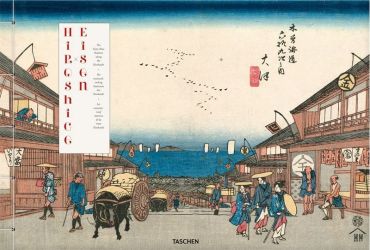
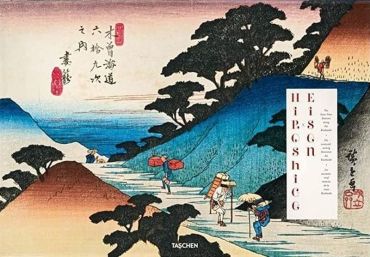
The Kisokaido route through Japan was ordained in the early 1600s by the country’s then-ruler Tokugawa Ieyasu, who decreed that staging posts be installed along the length of the arduous passage between Edo (present-day Tokyo) and Kyoto. Inns, shops, and restaurants were established to provide sustenance and lodging to weary travelers. In 1835, renowned woodblock print artist Keisai Eisen was commissioned to create a series of works to chart the Kisokaido journey. After producing 24 prints, Eisen was replaced by Utagawa Hiroshige, who completed the series of 70 prints in 1838.
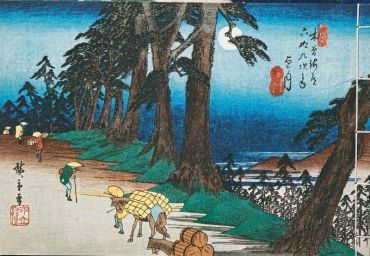
Both Eisen and Hiroshige were master print practitioners. In The Sixty-Nine Stations along the Kisokaido, we find the artists’ distinct styles as much as their shared expertise. From the busy starting post of Nihonbashi to the castle town of Iwamurata, Eisen opts for a more muted palette but excels in figuration, particularly of glamorous women, and relishes snapshots of activity along the route, from shoeing a horse to winnowing rice. Hiroshige demonstrates his mastery of landscape with grandiose and evocative scenes, whether it’s the peaceful banks of the Ota River, the forbidding Wada Pass, or a moonlit ascent between Yawata and Mochizuki.
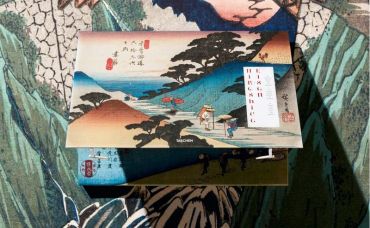
Taken as a whole, The Sixty-Nine Stations collection represents not only a masterpiece of woodblock practice, including bold compositions and an experimental use of color, but also a charming tapestry of 19th-century Japan, long before the specter of industrialization. This TASCHEN XXL edition revives the series with due scale and splendor. Sourced from the only-known set of a near-complete run of the first edition of the series, this legendary publication is reproduced in optimum quality, bound in the Japanese tradition and with uncut paper. A perfect companion piece to TASCHEN’s One Hundred Famous Views of Edo, it is at once a visual delight and a major artifact from the bygone era of Imperial Japan.
Both Eisen and Hiroshige were master print practitioners. In The Sixty-Nine Stations along the Kisokaido, we find the artists’ distinct styles as much as their shared expertise. From the busy starting post of Nihonbashi to the castle town of Iwamurata, Eisen opts for a more muted palette but excels in figuration, particularly of glamorous women, and relishes snapshots of activity along the route, from shoeing a horse to winnowing rice. Hiroshige demonstrates his mastery of landscape with grandiose and evocative scenes, whether it’s the peaceful banks of the Ota River, the forbidding Wada Pass, or a moonlit ascent between Yawata and Mochizuki.
Taken as a whole, The Sixty-Nine Stations collection represents not only a masterpiece of woodblock practice, including bold compositions and an experimental use of color, but also a charming tapestry of 19th-century Japan, long before the specter of industrialization. This TASCHEN XXL edition revives the series with due scale and splendor. Sourced from the only-known set of a near-complete run of the first edition of the series, this legendary publication is reproduced in optimum quality, bound in the Japanese tradition and with uncut paper. A perfect companion piece to TASCHEN’s One Hundred Famous Views of Edo, it is at once a visual delight and a major artifact from the bygone era of Imperial Japan.
Маршрут Кісокайдо через Японію був прокладений на початку 1600-х років тодішнім правителем країни Токугавою Ієясу, який наказав встановити зупинки вздовж важкого шляху між Едо (сучасний Токіо) і Кіото. Заїжджі двори, крамниці та ресторани були створені для того, щоб забезпечити втомлених мандрівників їжею та нічлігом. У 1835 році відомий художник ксилографії Кейсай Айзен отримав замовлення створити серію робіт, які б відобразили подорож Кісокайдо. Після створення 24 гравюр Айзена замінив Утаґава Хіросіґе, який завершив серію з 70 гравюр у 1838 році.
І Айзен, і Хіросіґе були майстерними гравюристами. У "Шістдесяти дев'яти станціях уздовж Кісокайдо" ми бачимо як відмінні стилі художників, так і їхній спільний досвід. Від жвавого стартового пункту Ніхонбасі до міста-замку Івамурата Айзен обирає більш приглушену палітру, але досягає успіху в зображенні фігур, особливо гламурних жінок, і насолоджується моментальними знімками діяльності вздовж маршруту, від підковування коня до збирання рису. Хіросіґе демонструє свою майстерність пейзажу в грандіозних і виразних сценах, чи то мирні береги річки Ота, чи то заборонений перевал Вада, чи то місячне сходження між Яватою і Мочізукі.
В цілому, колекція "Шістдесят дев'ять станцій" - це не лише шедевр ксилографії, що включає сміливі композиції та експериментальне використання кольору, але й чарівний гобелен Японії 19-го століття, задовго до примари індустріалізації. Це видання TASCHEN XXL відроджує серію з належним масштабом і пишністю. Це легендарне видання, що походить з єдиного відомого набору майже повного тиражу першого видання серії, відтворено в оптимальній якості, переплетено в японській традиції та виготовлено з нерозрізаного паперу. Ідеальне доповнення до "Ста відомих видів Едо" від TASCHEN, це водночас і візуальна насолода, і важливий артефакт з минулої епохи Імператорської Японії.
- АвторAndreas Marks
- КатегоріяКультура та мистецтво
- МоваАнглійськаФранцузькаНімецька
- Рік2019
- Сторінок234
- Формат300х440 мм
- ОбкладинкаТверда
- Тип паперуКрейдований
- ІлюстраціїКольорові
7430 ₴
Відділення Нова Пошта80 ₴
Поштомат Нова Пошта80 ₴
Кур’єр Нова Пошта120 ₴
Відділення УкрПошта50 ₴
Кур’єр за адресою90 ₴
















допоможіть тим, хто ще не читав