

Hokusai 30362
The Old Man Mad about Painting
Hokusai, the master who unleashed a tsunami on the art world
Meet the artist whose majestic breaking wave sent ripples across the world. Katsushika Hokusai (1760–1849) is not only one of the giants of Japanese art and a legend of the Edo period, but also a founding father of Western modernism, whose prolific gamut of prints, illustrations, paintings, and beyond forms one of the most comprehensive oeuvres of ukiyo-e art and a benchmark of japonisme. His influence spread through Impressionism, Art Nouveau, Jugendstil, and beyond, enrapturing the likes of Claude Monet (who bought 23 of his prints), Berthe Morisot, Edgar Degas, Mary Cassatt, and Vincent van Gogh.
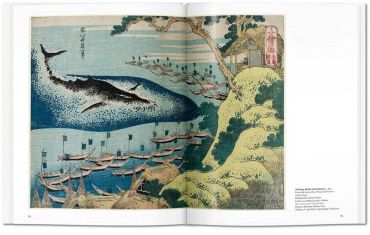
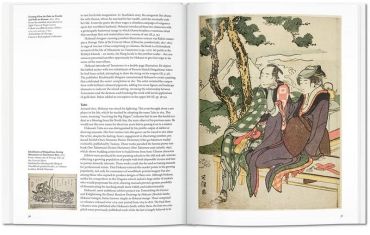
Hokusai was always a man on the move. He changed domicile more than 90 times during his lifetime and changed his own name through at least seven professional pseudonyms. In his art, he adopted the same restlessness, covering the complete spectrum of Japanese ukiyo-e (“pictures of the floating world”) practice in painting and woodblock, from single-sheet prints of landscapes and actors to erotic books, album prints, illustrations for verse anthologies and historical novels, and surimono, which were privately issued prints for special occasions.
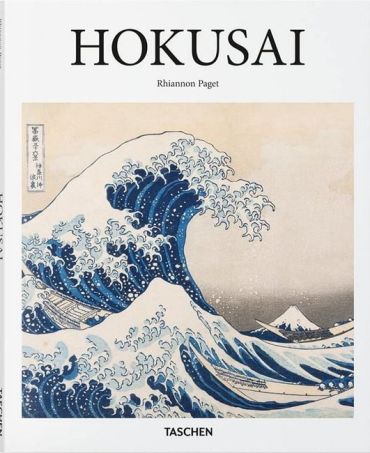
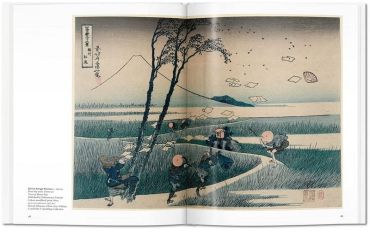
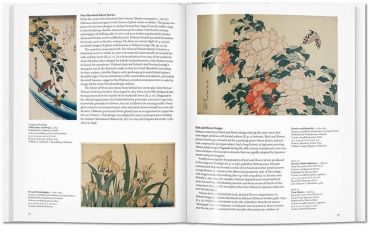
Hokusai’s print series Thirty-Six Views of Mount Fuji, published between 1826 and 1833 is the artist’s most renowned work and, with its soaring peak through different seasons and from different vantage points, marked the towering summit of the Japanese landscape print. The series’ The Great Wave off Kanagawa, also known simply as The Great Wave, is one of the most recognized images of Japanese art in the world.
This TASCHEN introduction spans the length and breadth of Hokusai’s career with key pieces from his far-reaching portfolio. Through these meticulous, majestic works and series, we trace the variety of Hokusai’s subjects, from erotic books to historical novels, and the evolution of his vivid formalism and decisive delineation of space through color and line that would go on to liberate Western art from the constraints of its one-point perspective and unleash the modernist momentum.
Hokusai, the master who unleashed a tsunami on the art world
Meet the artist whose majestic breaking wave sent ripples across the world. Katsushika Hokusai (1760–1849) is not only one of the giants of Japanese art and a legend of the Edo period, but also a founding father of Western modernism, whose prolific gamut of prints, illustrations, paintings, and beyond forms one of the most comprehensive oeuvres of ukiyo-e art and a benchmark of japonisme. His influence spread through Impressionism, Art Nouveau, Jugendstil, and beyond, enrapturing the likes of Claude Monet (who bought 23 of his prints), Berthe Morisot, Edgar Degas, Mary Cassatt, and Vincent van Gogh.
Hokusai was always a man on the move. He changed domicile more than 90 times during his lifetime and changed his own name through at least seven professional pseudonyms. In his art, he adopted the same restlessness, covering the complete spectrum of Japanese ukiyo-e (“pictures of the floating world”) practice in painting and woodblock, from single-sheet prints of landscapes and actors to erotic books, album prints, illustrations for verse anthologies and historical novels, and surimono, which were privately issued prints for special occasions.
Hokusai’s print series Thirty-Six Views of Mount Fuji, published between 1826 and 1833 is the artist’s most renowned work and, with its soaring peak through different seasons and from different vantage points, marked the towering summit of the Japanese landscape print. The series’ The Great Wave off Kanagawa, also known simply as The Great Wave, is one of the most recognized images of Japanese art in the world.
This TASCHEN introduction spans the length and breadth of Hokusai’s career with key pieces from his far-reaching portfolio. Through these meticulous, majestic works and series, we trace the variety of Hokusai’s subjects, from erotic books to historical novels, and the evolution of his vivid formalism and decisive delineation of space through color and line that would go on to liberate Western art from the constraints of its one-point perspective and unleash the modernist momentum.
Старий, схиблений на живописі
Хокусай, майстер, який викликав цунамі у світі мистецтва
Познайомтеся з художником, чия велична хвиля, що розбилася об землю, сколихнула весь світ. Кацусіка Хокусай (1760-1849) - не лише один із гігантів японського мистецтва та легенда епохи Едо, а й батько-засновник західного модернізму, чия плідна гама гравюр, ілюстрацій, картин і не тільки формує один із найповніших творів мистецтва укійо-е і є еталоном японізму. Його вплив поширився на імпресіонізм, модерн, югендстиль та інші напрямки, захопивши таких митців, як Клод Моне (який придбав 23 його гравюри), Берта Морізо, Едгар Дега, Мері Кассат та Вінсент Ван Гог.
Хокусай завжди був людиною в русі. Протягом життя він змінював місце проживання понад 90 разів, а власне ім'я змінив щонайменше сім професійних псевдонімів. У своєму мистецтві він перейняв той самий неспокій, охоплюючи повний спектр японської практики укійо-е ("картини плаваючого світу") у живописі та ксилографії, від одноаркушевих гравюр із зображеннями пейзажів та акторів до еротичних книг, альбомних гравюр, ілюстрацій до антологій віршів та історичних романів, а також сурімоно - приватних гравюр, що видавалися для особливих випадків.
Серія гравюр Хокусая "Тридцять шість видів гори Фудзі", опублікована між 1826 та 1833 роками, є найвідомішою роботою художника і, завдяки своїм високим пікам у різні пори року та з різних точок зору, ознаменувала собою вершину японської пейзажної гравюри. Серія "Велика хвиля біля Канагави", також відома як "Велика хвиля", є одним з найбільш впізнаваних зображень японського мистецтва у світі.
Цей вступ від TASCHEN охоплює весь творчий шлях Хокусая і містить ключові роботи з його багатого портфоліо. Через ці ретельні, величні роботи та серії ми простежуємо розмаїття тем Хокусая, від еротичних книг до історичних романів, а також еволюцію його яскравого формалізму та рішучого окреслення простору за допомогою кольору та лінії, що згодом звільнить західне мистецтво від обмежень його одноточкової перспективи та вивільнить модерністський імпульс.
- АвторRhiannon Paget
- КатегоріяКультура та мистецтво
- МоваАнглійська
- Рік2018
- Сторінок96
- Формат210х260 мм
- ОбкладинкаТверда
- Тип паперуОфсетний
- ІлюстраціїКольорові
- СеріяBasic Art Series 2.0
900 ₴
Відділення Нова Пошта80 ₴
Поштомат Нова Пошта80 ₴
Кур’єр Нова Пошта120 ₴
Відділення УкрПошта50 ₴
Кур’єр за адресою90 ₴








допоможіть тим, хто ще не читав