

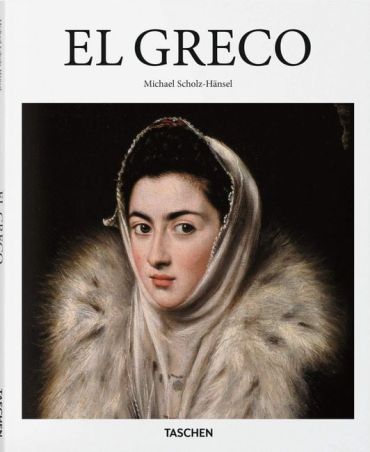
El Greco 36445
16th-century modern: The unique El Greco vision
To his contemporaries in late 16th-century Venice, El Greco (1541–1614) was a contrary fellow, an innate artist blessed with extraordinary talent, but stubborn in the pursuit of his own path. Throughout his career, as he progressed from Crete to Venice, to Rome and ultimately Toledo, Spain, “The Greek” stood apart from his peers, merging different Western art traditions to create a unique pictorial language.
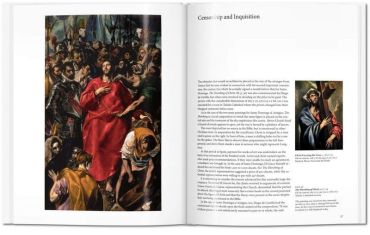
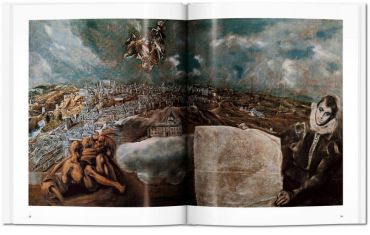
El Greco’s single-minded style rejected naturalism and rejected accessibility. Works such as The Disrobing of Christ (1577–79), The Burial of the Count of Orgaz (1586–88), and The Vision of St John (1608–14) reveal elongated, twisted figures; unreal colors; and an experimental rendering of space – all resistant to easy viewing and intent, instead, on an art of epic grandeur and intellectual beauty.
Frequently regarded with suspicion and criticism during his lifetime, El Greco was revived by a troop of ardent modern admirers, including Pablo Picasso, Roger Fry, and Der Blaue Reiter pioneer Franz Marc. Today, the artist belongs to the privileged group of great old master painters, as much an anomaly of his age, as a reference point across the centuries.
This essential introduction from TASCHEN Basic Art 2.0 explores the influences and the ingredients of El Greco’s radical and singular vision, from the symbolic world of Byzantine icons and the humanistic values of the Renaissance to the nascent beginnings of conceptual practice.
About the series:
Each book in TASCHEN’s Basic Art series features:
To his contemporaries in late 16th-century Venice, El Greco (1541–1614) was a contrary fellow, an innate artist blessed with extraordinary talent, but stubborn in the pursuit of his own path. Throughout his career, as he progressed from Crete to Venice, to Rome and ultimately Toledo, Spain, “The Greek” stood apart from his peers, merging different Western art traditions to create a unique pictorial language.
El Greco’s single-minded style rejected naturalism and rejected accessibility. Works such as The Disrobing of Christ (1577–79), The Burial of the Count of Orgaz (1586–88), and The Vision of St John (1608–14) reveal elongated, twisted figures; unreal colors; and an experimental rendering of space – all resistant to easy viewing and intent, instead, on an art of epic grandeur and intellectual beauty.
Frequently regarded with suspicion and criticism during his lifetime, El Greco was revived by a troop of ardent modern admirers, including Pablo Picasso, Roger Fry, and Der Blaue Reiter pioneer Franz Marc. Today, the artist belongs to the privileged group of great old master painters, as much an anomaly of his age, as a reference point across the centuries.
This essential introduction from TASCHEN Basic Art 2.0 explores the influences and the ingredients of El Greco’s radical and singular vision, from the symbolic world of Byzantine icons and the humanistic values of the Renaissance to the nascent beginnings of conceptual practice.
About the series:
Each book in TASCHEN’s Basic Art series features:
- a detailed chronological summary of the life and oeuvre of the artist, covering his or her cultural and historical importance
- a concise biography
- approximately 100 illustrations with explanatory captions
Модерн 16-го століття: унікальне бачення Ель Греко
Для своїх сучасників у Венеції кінця 16-го століття Ель Греко (1541-1614) був протилежністю, вродженим художником, обдарованим надзвичайним талантом, але впертим у пошуках власного шляху. Протягом усієї своєї кар'єри, подорожуючи з Криту до Венеції, Риму і, зрештою, Толедо (Іспанія), "Грек" вирізнявся з-поміж своїх колег, поєднуючи різні західні мистецькі традиції, щоб створити унікальну живописну мову.
Цілеспрямований стиль Ель Греко відкидав натуралізм і відкидав доступність. Такі роботи, як "Роздягання Христа" (1577-79), "Поховання графа Оргаса" (1586-88) та "Видіння святого Іоанна" (1608-14) демонструють витягнуті, скручені фігури, нереальні кольори та експериментальну передачу простору - все це протистоїть легкому сприйняттю і націлене, натомість, на мистецтво епічної величі та інтелектуальної краси.
Ель Греко, до якого за життя часто ставилися з підозрою та критикою, був відроджений загоном палких сучасних шанувальників, серед яких Пабло Пікассо, Роджер Фрай та піонер Der Blaue Reiter Франц Марк. Сьогодні художник належить до привілейованої групи великих старих майстрів живопису, будучи одночасно і аномалією свого часу, і точкою відліку через століття.
У цьому важливому вступі до TASCHEN Basic Art 2.0 досліджуються впливи та складові радикального та унікального бачення Ель Греко, від символічного світу візантійських ікон та гуманістичних цінностей Ренесансу до зародження концептуальних практик.
Про серію:
Кожна книжка серії "Базове мистецтво" від TASCHEN містить:
- детальний хронологічний виклад життя і творчості митця, що висвітлює його культурне та історичне значення
- стислу біографію
- близько 100 ілюстрацій з пояснювальними підписами
- АвторMichael Scholz-Hansel
- КатегоріяКультура та мистецтво
- МоваАнглійська
- Рік2016
- Сторінок96
- Формат210х260 мм
- ОбкладинкаТверда
- Тип паперуОфсетний
- ІлюстраціїКольорові
- Термін поставки5-7 дней
- СеріяBasic Art Series 2.0
900 ₴
Відділення Нова Пошта80 ₴
Поштомат Нова Пошта80 ₴
Кур’єр Нова Пошта120 ₴
Відділення УкрПошта50 ₴
Кур’єр за адресою90 ₴










допоможіть тим, хто ще не читав