

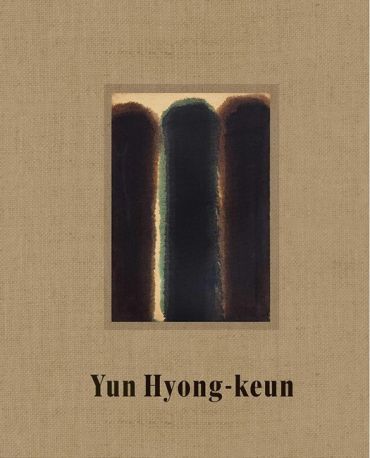
Yun Hyong-keun / Paris 43442
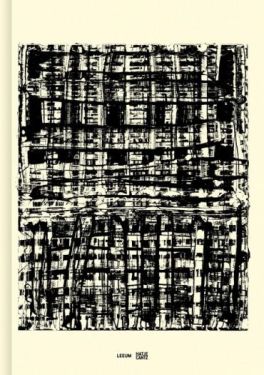
A contemplative exploration of the work of Yun Hyong-keun, a renowned Korean abstract painter, during a transformative period in the early 1980s.
'His brushstrokes bled naturally across the linen or cotton raw canvas -appearing light brown as its fabric was not bleached - reminiscent of traditional East Asian calligraphy or ink and wash paintings.' - The Korea Times
From 1980 to 1982, Yun Hyong-keun resided in Paris, seeking both peace from the violent political turmoil that exploded in South Korea and a new, artistic center in which to create work. His brief but illuminating stay in the city became the locus of his freedom of expression, which had been subject to political repression he had experienced in his home country.
Yun's signature abstract compositions engage and transcend Eastern and Western art movements and visual traditions, establishing him as one of the most significant Korean artists of the twentieth century. He is the most prominent figure associated with the Dansaekhwa (monochrome painting) movement, the name given to a group of influential Korean artists from the 1960s and 1970s. Using a restricted palette of ultramarine and umber, Yun created his compositions of monolithic swathes by adding layer upon layer of paint onto raw canvas or linen, and hanji (Korean mulberry paper), often applying the next coat before the last one had dried.
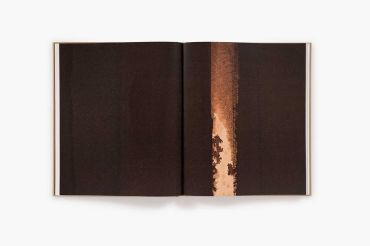
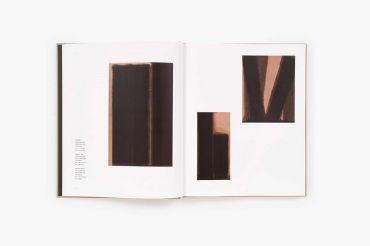
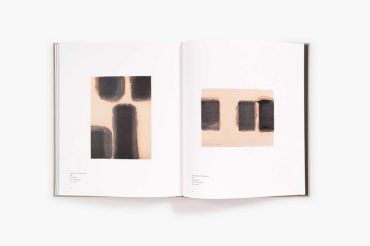
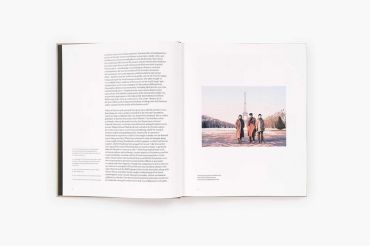
Published on the occasion of the artist's exhibition at David Zwirner, Paris, in 2023, this limited-run cloth-bound catalogue focuses on his paintings and works on hanji. In an accompanying text, the art critic Oh Gwangsu considers Yun's work prior to his move to Paris, particularly the artist’s shift toward his signature works in the 1970s. The writer Mara Hoberman then reflects on Yun’s practice and influences upon his arrival in the European capital, including an examination of his more nuanced understanding of the color black, which takes on different meanings in France and Korea.
'His brushstrokes bled naturally across the linen or cotton raw canvas -appearing light brown as its fabric was not bleached - reminiscent of traditional East Asian calligraphy or ink and wash paintings.' - The Korea Times
From 1980 to 1982, Yun Hyong-keun resided in Paris, seeking both peace from the violent political turmoil that exploded in South Korea and a new, artistic center in which to create work. His brief but illuminating stay in the city became the locus of his freedom of expression, which had been subject to political repression he had experienced in his home country.
Yun's signature abstract compositions engage and transcend Eastern and Western art movements and visual traditions, establishing him as one of the most significant Korean artists of the twentieth century. He is the most prominent figure associated with the Dansaekhwa (monochrome painting) movement, the name given to a group of influential Korean artists from the 1960s and 1970s. Using a restricted palette of ultramarine and umber, Yun created his compositions of monolithic swathes by adding layer upon layer of paint onto raw canvas or linen, and hanji (Korean mulberry paper), often applying the next coat before the last one had dried.
Published on the occasion of the artist's exhibition at David Zwirner, Paris, in 2023, this limited-run cloth-bound catalogue focuses on his paintings and works on hanji. In an accompanying text, the art critic Oh Gwangsu considers Yun's work prior to his move to Paris, particularly the artist’s shift toward his signature works in the 1970s. The writer Mara Hoberman then reflects on Yun’s practice and influences upon his arrival in the European capital, including an examination of his more nuanced understanding of the color black, which takes on different meanings in France and Korea.
Споглядальне дослідження творчості Юна Хьонг-Кеуна, відомого корейського художника-абстракціоніста, під час трансформаційного періоду на початку 1980-х років.
«Його мазки природно розтікаються по лляному або бавовняному полотну, яке виглядає світло-коричневим, оскільки тканина не була вибілена, нагадуючи традиційну східноазійську каліграфію або картини, виконані тушшю та розмивом». - The Korea Times
З 1980 по 1982 рік Юн Хьонг Кюн мешкав у Парижі, шукаючи спокою від жорстоких політичних потрясінь, що вибухнули в Південній Кореї, та нового мистецького осередку для створення робіт. Його коротке, але просвітницьке перебування в місті стало місцем його свободи самовираження, яка зазнала політичних репресій у його рідній країні.
Фірмові абстрактні композиції Юна залучають і виходять за межі східних і західних мистецьких течій та візуальних традицій, утверджуючи його як одного з найвизначніших корейських художників ХХ століття. Він є найвизначнішою фігурою, пов'язаною з рухом Дансаехва (монохромний живопис) - назвою групи впливових корейських художників 1960-х і 1970-х років. Використовуючи обмежену палітру ультрамарину та умбри, Юн створював свої композиції з монолітних мазків, додаючи шар за шаром фарби на сире полотно або полотно та ханджі (корейський шовковичний папір), часто наносячи наступний шар ще до того, як висохне попередній.
Виданий з нагоди виставки художника у Давида Цвірнера в Парижі у 2023 році, цей каталог у тканинній палітурці з обмеженим тиражем зосереджується на його живописі та роботах на ханджі. У супровідному тексті мистецтвознавець О Гван Су розглядає творчість Юна до його переїзду в Париж, зокрема, перехід художника до своїх авторських робіт у 1970-х роках. Письменниця Мара Гоберман розмірковує про практику Юна та впливи на нього після приїзду до європейської столиці, зокрема про його більш нюансоване розуміння чорного кольору, який набуває різних значень у Франції та Кореї.
- АвторMara Hoberman
- КатегоріяХобі та захоплення
- МоваАнглійська
- Рік2024
- Сторінок104
- Формат240x290 мм
- ОбкладинкаТверда
- Тип паперуКрейдований
- ІлюстраціїКольорові
- ЖанрКультура та мистецтвоОбразотворче мистецтвоМонографія
- Вік16+
3342 ₴
Відділення Нова Пошта80 ₴
Поштомат Нова Пошта80 ₴
Кур’єр Нова Пошта120 ₴
Відділення УкрПошта50 ₴
Кур’єр за адресою90 ₴




допоможіть тим, хто ще не читав