

Indian Temple Sculpture 45310
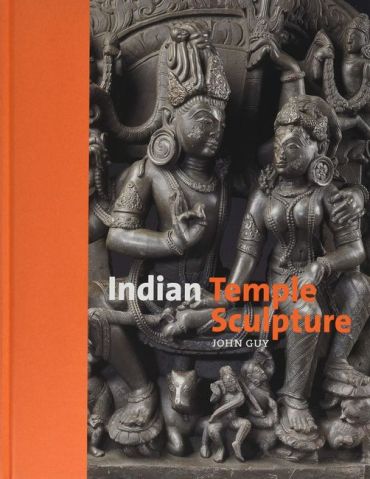
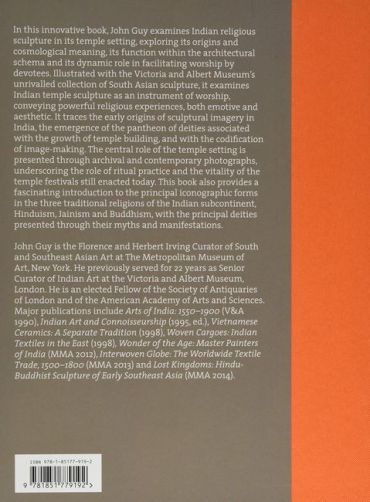
In this innovative book, John Guy examines Indian religious sculpture in its temple setting, exploring its origins and cosmological meaning, its function within the architectural schema and its dynamic role in facilitating worship by devotees.
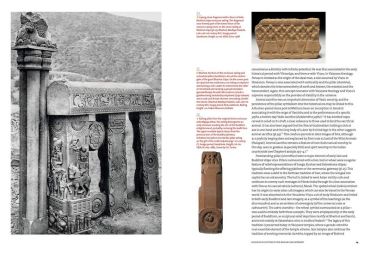
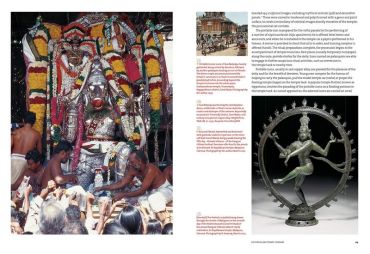
Illustrated with the Victoria and Albert Museum's unrivalled collection of South Asian sculpture, it examines Indian temple sculpture as an instrument of worship, conveying powerful religious experiences, both emotive and aesthetic. It traces the early origins of sculptural imagery in India, the emergence of the pantheon of deities associated with the growth of temple building, and with the codification of image-making. The central role of the temple setting is presented through archival and contemporary photographs underscoring the role of ritual practice and the vitality of the temple festivals still enacted today. This book also provides a fascinating introduction to the principal iconographic forms in the three traditional religions of the Indian subcontinent, Hinduism, Jainism and Buddhism, with the principal deities presented through their myths and manifestations.
Illustrated with the Victoria and Albert Museum's unrivalled collection of South Asian sculpture, it examines Indian temple sculpture as an instrument of worship, conveying powerful religious experiences, both emotive and aesthetic. It traces the early origins of sculptural imagery in India, the emergence of the pantheon of deities associated with the growth of temple building, and with the codification of image-making. The central role of the temple setting is presented through archival and contemporary photographs underscoring the role of ritual practice and the vitality of the temple festivals still enacted today. This book also provides a fascinating introduction to the principal iconographic forms in the three traditional religions of the Indian subcontinent, Hinduism, Jainism and Buddhism, with the principal deities presented through their myths and manifestations.
У цій інноваційній книжці Джон Ґай розглядає індійську релігійну скульптуру в її храмовому оточенні, досліджуючи її походження та космологічне значення, її функцію в архітектурній схемі та динамічну роль у сприянні поклонінню вірних.
Проілюстрована неперевершеною колекцією південноазійської скульптури Музею Вікторії та Альберта, вона розглядає індійську храмову скульптуру як інструмент поклоніння, що передає потужні релігійні переживання, як емоційні, так і естетичні. Вона простежує ранні витоки скульптурних образів в Індії, появу пантеону божеств, пов'язану зі зростанням храмового будівництва та кодифікацією образотворення. Центральна роль храмового антуражу представлена через архівні та сучасні фотографії, що підкреслюють роль ритуальної практики та життєздатність храмових фестивалів, які відбуваються і сьогодні. Ця книга також пропонує захоплюючий вступ до основних іконографічних форм трьох традиційних релігій Індійського субконтиненту - індуїзму, джайнізму та буддизму - з головними божествами, представленими через їхні міфи та маніфестації.
- АвторJohn Guy
- КатегоріяКультура та мистецтво
- МоваАнглійська
- Рік2018
- Сторінок192
- Формат220х280 мм
- ОбкладинкаТверда
- Тип паперуОфсетний
- ІлюстраціїКольорові
- ЖанрОбразотворче мистецтво
- Вік16+
2144 ₴
Відділення Нова Пошта80 ₴
Поштомат Нова Пошта80 ₴
Кур’єр Нова Пошта120 ₴
Відділення УкрПошта50 ₴
Кур’єр за адресою90 ₴





допоможіть тим, хто ще не читав