

Sebastiao Salgado. Children 31011
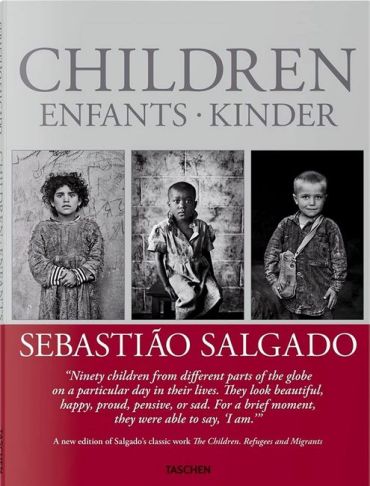
In every crisis situation, children are the greatest victims. Physically weak, they are often the first to succumb to hunger, disease, and dehydration. Innocent to the workings and failings of the world, they are unable to understand why there is danger, why there are people who want to hurt them, or why they must leave, perhaps quite suddenly, and abandon their schools, their friends, and their home.
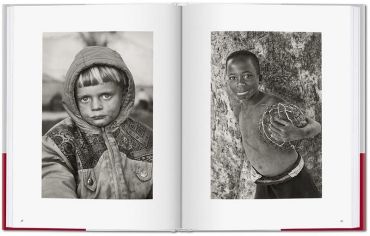
In this companion series to Exodus, Sebastiao Salgado presents 90 portraits of the youngest exiles, migrants, and refugees. His subjects are from different countries, victims to different crises, but they are all on the move, and all under the age of 15. Through his extensive refugee project, what struck Salgado about these boys and girls was not only the implicit innocence in their suffering but also their radiant reserves of energy and enthusiasm, even in the most miserable of circumstances. From roadside refuges in Angola and Burundi to city slums in Brazil and sprawling camps in Lebanon and Iraq, the children remained children: they were quick to laugh as much as to cry, they played soccer, splashed in dirty water, got up to mischief with friends, and were typically ecstatic at the prospect of being photographed.
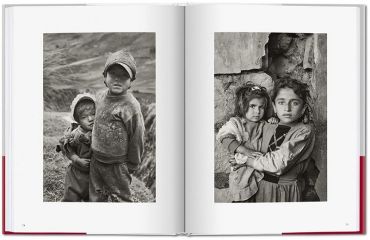
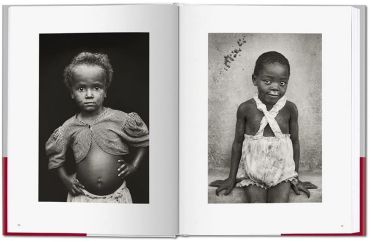
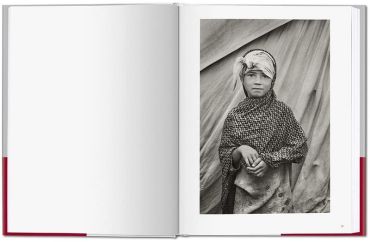
For Salgado, the exuberance presented a curious paradox. How can a smiling child represent circumstances of deprivation and despair? What he noticed, though, was that when he asked the children to line up, and took their portraits one by one, the group giddiness would fade. Face to face with his camera, each child would become much more serious. They would look at him not as part of a noisy crowd, but as an individual. Their poses would become earnest. They looked into the lens with a sudden intensity, as if abruptly taking stock of themselves and their situation. And in the expression of their eyes, or the nervous fidget of small hands, or the way frayed clothes hung off painfully thin frames, Salgado found he had a refugee portfolio that deserved a forum of its own.
The photographs do not try to make a statement about their subjects’ feelings, or to spell out the particulars of their health, educational, and housing deficits. Rather, the collection allows 90 children to look out at the viewer with all the candor of youth and all the uncertainty of their future. Beautiful, proud, pensive, and sad, they stand before the camera for a moment in their lives, but ask questions that haunt for years to come. Will they remain in exile? Will they always know an enemy? Will they grow up to forgive or seek revenge? Will they grow up at all?
In this companion series to Exodus, Sebastiao Salgado presents 90 portraits of the youngest exiles, migrants, and refugees. His subjects are from different countries, victims to different crises, but they are all on the move, and all under the age of 15. Through his extensive refugee project, what struck Salgado about these boys and girls was not only the implicit innocence in their suffering but also their radiant reserves of energy and enthusiasm, even in the most miserable of circumstances. From roadside refuges in Angola and Burundi to city slums in Brazil and sprawling camps in Lebanon and Iraq, the children remained children: they were quick to laugh as much as to cry, they played soccer, splashed in dirty water, got up to mischief with friends, and were typically ecstatic at the prospect of being photographed.
For Salgado, the exuberance presented a curious paradox. How can a smiling child represent circumstances of deprivation and despair? What he noticed, though, was that when he asked the children to line up, and took their portraits one by one, the group giddiness would fade. Face to face with his camera, each child would become much more serious. They would look at him not as part of a noisy crowd, but as an individual. Their poses would become earnest. They looked into the lens with a sudden intensity, as if abruptly taking stock of themselves and their situation. And in the expression of their eyes, or the nervous fidget of small hands, or the way frayed clothes hung off painfully thin frames, Salgado found he had a refugee portfolio that deserved a forum of its own.
The photographs do not try to make a statement about their subjects’ feelings, or to spell out the particulars of their health, educational, and housing deficits. Rather, the collection allows 90 children to look out at the viewer with all the candor of youth and all the uncertainty of their future. Beautiful, proud, pensive, and sad, they stand before the camera for a moment in their lives, but ask questions that haunt for years to come. Will they remain in exile? Will they always know an enemy? Will they grow up to forgive or seek revenge? Will they grow up at all?
У кожній кризовій ситуації найбільше страждають діти. Фізично слабкі, вони часто першими піддаються голоду, хворобам і зневодненню. Невинні до того, що відбувається у світі, вони не здатні зрозуміти, чому існує небезпека, чому є люди, які хочуть завдати їм шкоди, або чому вони повинні виїхати, можливо, досить раптово, і залишити свої школи, друзів і свій дім.
У цій серії, що супроводжує "Вихід", Себастьяо Сальгадо представляє 90 портретів наймолодших вигнанців, мігрантів та біженців. Його герої походять з різних країн, є жертвами різних криз, але всі вони перебувають у русі, і всім їм ще не виповнилося 15 років. У своєму масштабному проекті про біженців Сальґадо вразила не лише невинність цих хлопчиків і дівчаток у їхніх стражданнях, але й променисті запаси енергії та ентузіазму, які вони виявляють навіть у найтяжчих обставинах. Від придорожніх притулків в Анголі та Бурунді до міських нетрів у Бразилії та розлогих таборів у Лівані та Іраку, діти залишалися дітьми: вони сміялися так само швидко, як і плакали, грали у футбол, хлюпалися у брудній воді, пустували з друзями і, як правило, були в захваті від перспективи бути сфотографованими.
Для Сальґадо це буяння стало цікавим парадоксом. Як може усміхнена дитина представляти обставини позбавлення і відчаю? Однак він помітив, що коли він просив дітей вишикуватися в лінію і фотографував їх по черзі, групове запаморочення зникало. Опинившись віч-на-віч з його камерою, кожна дитина ставала набагато серйознішою. Вони дивилися на нього не як на частину галасливого натовпу, а як на особистість. Їхні пози ставали серйозними. Вони дивилися в об'єктив з несподіваною інтенсивністю, ніби різко оцінюючи себе і свою ситуацію. І у виразі їхніх очей, чи нервовому сованні маленьких рученят, чи тому, як потертий одяг звисає з болісно тонких рам, Сальґадо зрозумів, що має портфоліо біженців, яке заслуговує на окрему виставку.
Фотографії не намагаються зробити заяву про почуття своїх об'єктів або розповісти про їхні проблеми зі здоров'ям, освітою чи житлом. Натомість, колекція дозволяє 90 дітям подивитися на глядача з усією відвертістю юності і всією невизначеністю свого майбутнього. Красиві, горді, задумливі та сумні, вони стоять перед камерою на мить свого життя, але ставлять питання, які переслідують їх ще довгі роки. Чи залишаться вони у вигнанні? Чи завжди вони будуть знати ворога? Чи виростуть вони, щоб прощати чи мститися? Чи виростуть вони взагалі?
- АвторLelia Wanick Salgado
- КатегоріяКультура та мистецтво
- МоваАнглійськаФранцузькаНімецька
- Рік2016
- Сторінок124
- Формат250х320 мм
- ОбкладинкаТверда
- Тип паперуКрейдований
- ІлюстраціїКольорові
2380 ₴
Відділення Нова Пошта80 ₴
Поштомат Нова Пошта80 ₴
Кур’єр Нова Пошта120 ₴
Відділення УкрПошта50 ₴
Кур’єр за адресою90 ₴





допоможіть тим, хто ще не читав