

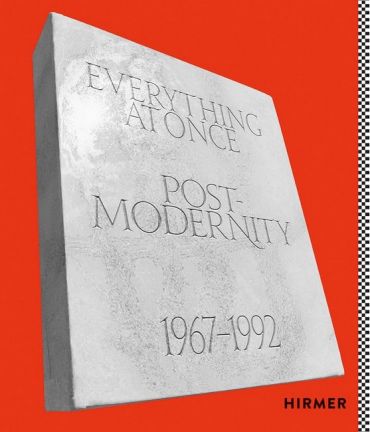
Everything at Once: Postmodernity 1967 - 1992 43544
Holding up a mirror to the present, the exhibition homes in on our current conflicts – from right-wing populism to identity politics. It allows us to ask, from the distance of a generation, what time we are actually living in. Is Postmodernity really over – or are we in the middle of it?
The year 1967 marked the beginning of our present: Modernism, which had presumed that everything could be sorted out through equal housing, furniture and rights for all, was abandoned, and from its ruins a bizarre, eccentric world was born. Architects declared the amusement park the new ideal city; designers shook off the yoke of good taste, and the conflict between the two dominant political systems gave way to the struggle for self-realisation. New media synchronised the globe, and images became the arena in which contests for style and recognition were waged. Showcasing spectacular examples of design, architecture, cinema, pop, philosophy, art and literature, the exhibition chronicles the dawn of the information society, the unleashing of the financial markets, the great age of subcultures, disco, punk and techno-pop, shoulder pads and Memphis furniture. It also chronicles the sudden surge in the construction of museums, the new temples of art and culture, to which we owe the largest exhibit, the Bundeskunsthalle itself. When the Bundeskunsthalle opened in 1992, the Cold War was over, and Francis Fukuyama published his famous book, in which he proclaimed ‘the end of history’ as such. Thirty years later, it is clear that history did not come to an end, and Postmodernism is once again a matter of considerable debate.
The year 1967 marked the beginning of our present: Modernism, which had presumed that everything could be sorted out through equal housing, furniture and rights for all, was abandoned, and from its ruins a bizarre, eccentric world was born. Architects declared the amusement park the new ideal city; designers shook off the yoke of good taste, and the conflict between the two dominant political systems gave way to the struggle for self-realisation. New media synchronised the globe, and images became the arena in which contests for style and recognition were waged. Showcasing spectacular examples of design, architecture, cinema, pop, philosophy, art and literature, the exhibition chronicles the dawn of the information society, the unleashing of the financial markets, the great age of subcultures, disco, punk and techno-pop, shoulder pads and Memphis furniture. It also chronicles the sudden surge in the construction of museums, the new temples of art and culture, to which we owe the largest exhibit, the Bundeskunsthalle itself. When the Bundeskunsthalle opened in 1992, the Cold War was over, and Francis Fukuyama published his famous book, in which he proclaimed ‘the end of history’ as such. Thirty years later, it is clear that history did not come to an end, and Postmodernism is once again a matter of considerable debate.
Як дзеркало в сьогодення, виставка висвітлює наші поточні конфлікти - від правого популізму до політики ідентичності. Вона дозволяє нам запитати з відстані покоління, в якому часі ми насправді живемо. Чи справді Постмодерн закінчився - чи ми перебуваємо в його середині?
1967 рік став початком нашого сьогодення: Модернізм, який припускав, що все можна владнати за допомогою рівного житла, меблів і прав для всіх, був відкинутий, і на його руїнах народився химерний, ексцентричний світ. Архітектори оголосили парк розваг новим ідеальним містом, дизайнери скинули з себе ярмо гарного смаку, а конфлікт між двома панівними політичними системами поступився місцем боротьбі за самореалізацію. Нові медіа синхронізували світ, а зображення стали ареною, на якій точилися змагання за стиль і визнання. Демонструючи вражаючі приклади дизайну, архітектури, кіно, поп-музики, філософії, мистецтва та літератури, виставка розповідає про світанок інформаційного суспільства, розквіт фінансових ринків, велику епоху субкультур, диско, панку і техно-попу, наплічників і меблів Мемфісу. Це також хроніка раптового сплеску будівництва музеїв, нових храмів мистецтва і культури, яким ми завдячуємо найбільшим експонатом - самою Бундескунстхалле. Коли Бундескунстхалле відкрився у 1992 році, Холодна війна закінчилася, а Френсіс Фукуяма опублікував свою знамениту книгу, в якій проголосив «кінець історії» як такої. Тридцять років потому стає зрозуміло, що історія не закінчилася, а постмодернізм знову є предметом значних дискусій.
- АвторBundeskunsthalle Bonn
- КатегоріяКультура та мистецтво
- МоваАнглійська
- Рік2024
- Сторінок288
- Формат240x280 мм
- ОбкладинкаМ'яка
- Тип паперуКрейдований
- ЖанрКультура та мистецтво
- Вік16+
2673 ₴
Відділення Нова Пошта80 ₴
Поштомат Нова Пошта80 ₴
Кур’єр Нова Пошта120 ₴
Відділення УкрПошта50 ₴
Кур’єр за адресою90 ₴




допоможіть тим, хто ще не читав